
A Vinyl Fence – Vinyl Fence – Privacy Fence – Horse Fence
Vinyl Fence | Vinyl Fencing | Vinyl PVC Fence | Horse Fence | Better Choices

1-800-431-4720

A Vinyl Fence – Vinyl Fence – Privacy Fence – Horse Fence
Vinyl Fence | Vinyl Fencing | Vinyl PVC Fence | Horse Fence | Better Choices

Browse Vinyl Fencing by Style
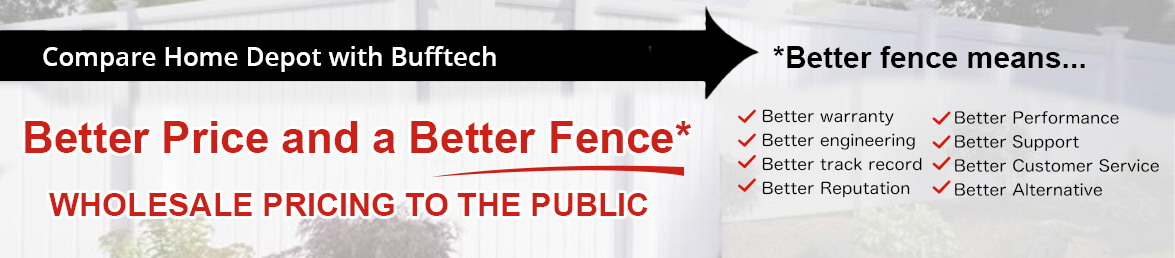
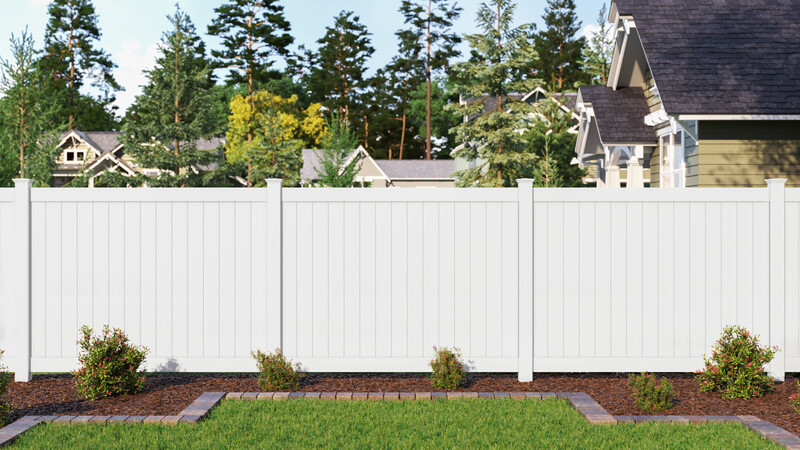
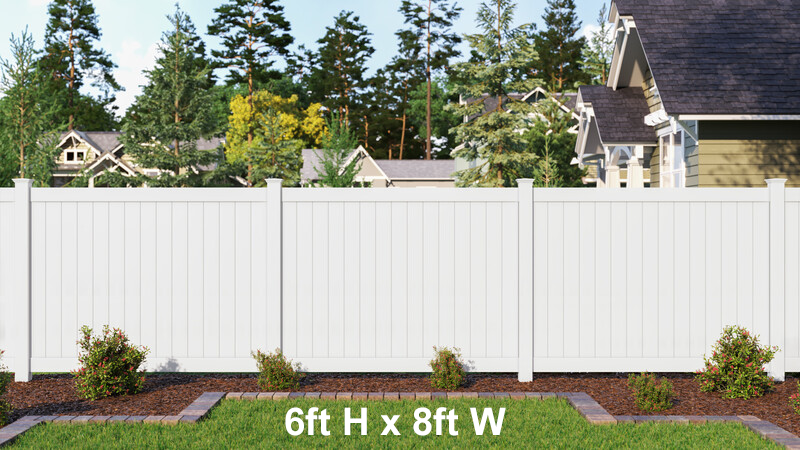
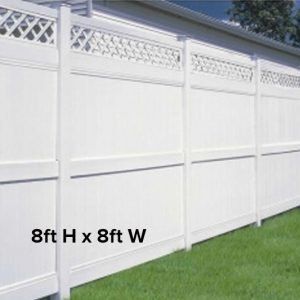
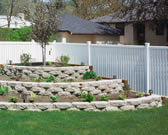
NEW Bufftech White Privacy Fence 6 X 8 $24.99 per ft. Or $199.99 per panel Complete including post, cap rails and T & G Pickets Finally an affordable White Privacy Fence.
More..
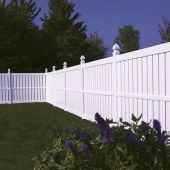
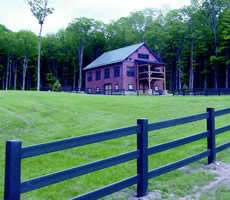
Over 20 horse fence choices from beautiful boundary fences to safe animal containment. 3 Rail from $10.99 per ft, crossbuck, black recycled fence, wood look, truckload pricing.
More..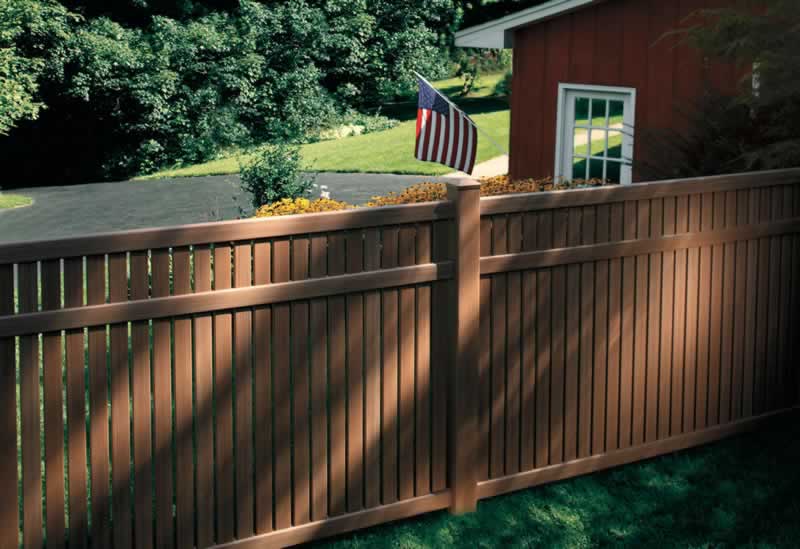
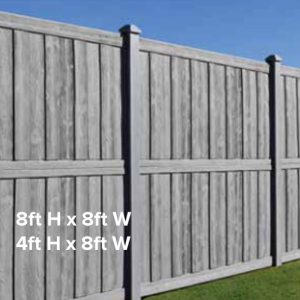
Looking for air flow and some visibility? Complete 4 x 8 section for $304.64. Multiple semi-private fence options including horizontal pickets, shadow box, smooth or textured, height, color and picket spacing.
More..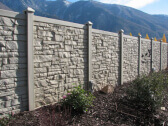
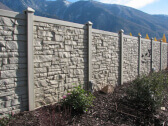
6 x 6 strong barrier from $42.64 per ft. Decorative rock wall, fade free, graffiti resistant and lifetime durability. Can withstand hurricane winds. 3-12 ft high, 6 color choices.
More..
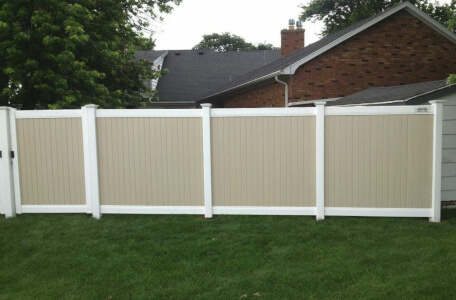
Stunning look, smooth or textured, contrasting colors for sophisticated styling. Design your own two tone fence to personalize and complement your home.
More..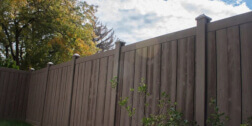
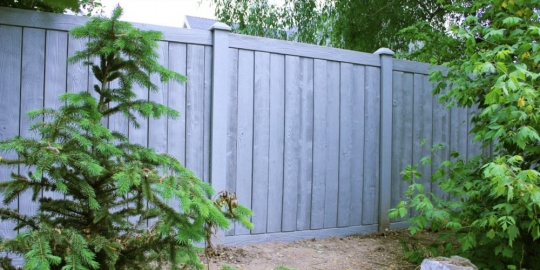
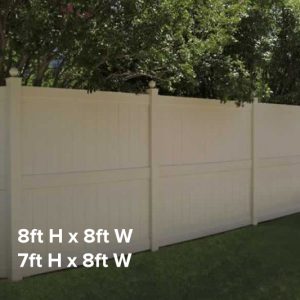
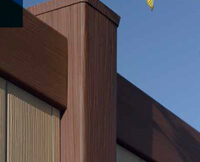
Realistic wood Look, maintenance free, good neighbor design, 5 color choices, 4 x 8, 6 x 6 and 8 x 8, matching gates. Galvanized steel in top and bottom rails.
More..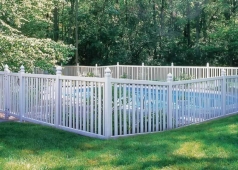
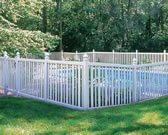
Meets pool safety codes. From $28.62 per ft. @ 4 ft. high in many color choices.
More..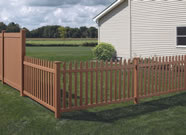
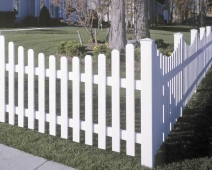
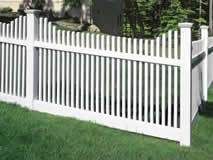
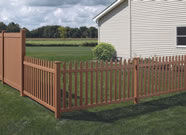
White traditional picket fence 4 ft high from $29.93 per ft. 3, 4, 5 and 6 ft high available. Classic to traditional, straight or concave, pointed or dog ear pickets, thru-picket good neighbor design.
More..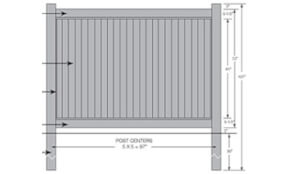
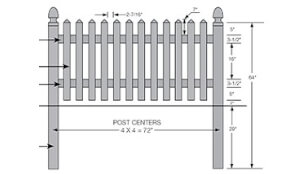
Find all the details for your fence style here. Height, width, dimension and all components in individual diagrams.
More..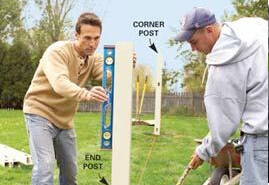
Anyone with just basic skills should be able to install the fence themselves and save a little money. Everything is pre-routed and just snaps together. No special tools except maybe a post hole digger, a tape measure and level.
More..
If the project is too big for your local handyman find a local, professional landscape company.
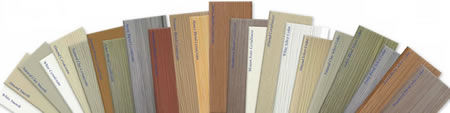
More..Select any of our Vinyl Fences to see which Vinyl Fence Colors are available for that style of Vinyl Fence.
Open Monday through Friday: 7am to 5pm (PST)
The Truth About Vinyl Fence Wall Thickness: Wall thickness of vinyl fence is NOT a true measure of strength or performance. It is touted by those who would mislead in order to make a sale. More
Our staff is NOT paid commission. This means they will help you find what you want, not what they want you to buy.
Now Twenty Three Texture and color choices from Bufftechfor your vinyl fence project plus Seven more from Tuff-Stuff
It’s all about choices and finding just the right landscape look for your home and sanctuary. It’s important to get it just the way you want it for it will last a lifetime and we’ll guarantee it. You now have more choices than ever before so let us send you a brochure or a sample of the one you like best.
Over 300 To Choose From!
At www.avinylfence.com, we offer an extensive selection of outdoor vinyl products online. Once you’ve found it, you’ll receive an instant quote for your entire project – or you can even call us and receive instant help. We’ll answer all of your questions and give you personalized help from our knowledgeable vinyl fencing experts. Build your vinyl fence online or call us toll free at 1-800-431-4720 to receive an instant quote for your fence project.
|
Compare Home Depot with Bufftech
|
|||||
| Manufacturer | Bufftech | Home Depot | Home Depot | ||
| Fence Style | Privacy | Somerset | Windham | Veranda | |
| Dimension | 6 ‘H X 8’ Wide | 6′ X 6’* | 6′ X 6’* | 6′ X 6’* | |
| Post | Included | $24.89 | $24.89 | $24.89 | |
| Panel | 6 ‘H X 8’ Wide Included | $68.97 | $68.97 | $89.97 | |
| Treated Wood Post Insert | NONE NEEDED | plus $14.94 | plus $14.94 | plus $14.94 | |
| Brackets and Screws** | NONE NEEDED | $9.94 | $9.94 | $9.94 | |
| Post Cap | included | $3.49 | $3.49 | $3.49 | |
| True Total Cost Per Linear Ft. | $25.29 | $17.88 | $17.19 | $21.62 | |
| Rail Lock Pins | Included | NONE | NONE | NONE | |
| Galvenized Steel*** | YES | NONE | NONE | NONE | |
| In Bottom Rail | YES | NONE | NONE | NONE | |
| Sales Tax (most states) | NONE**** | TAXED | TAXED | TAXED | |
Prices as advertised on the Home Depot web site as of 2/15/15
*6′ Panels mean more posts, more cement and more work
**Brackets break, screws add 34% to installation time and difficulty
***Very important so that section never sags or bends.
****No Sales Tax: AL, AK, AZ ,AR, CO, DE, GA, ID, IL, IN, IA, KY, MI, MN, MO, MT, NE, NV, NH, NJ, NY, ND, OH, OK, OR, PA, RI, SC, SD, TX, UT, VT, VA, WA, WI, WV, WY.
Call for freight quote. Save $200 when delivered to qualified commercial facility with fork lift available.
BOTTOMLINE: TOTAL PRICE FOR MUCH BETTER QUALITY FENCE WITH BETTER WARRANTY, BETTER ENGINEERING, BETTER TRACK RECORD OF PERFORMANCE AND QUALITY THAT WILL LAST FOR ABOUT THE SAME PRICE OR LESS THAN HOME DEPOT AS ADVERTISED ONLINE.
How to save money on your vinyl fence project. more
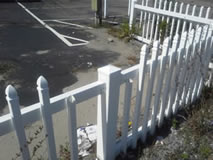
This or This
If you don’t want to do it yourself here’s how our customers have found good local installers and some things to avoid.
There are many installers in your market who do a very good job of installing fence. If they’re a fence company they will try to sell you their product. If they’re a landscape company or a contractor, they’ll likely install the fence you provide, (which you bought at wholesale from us), and remove the old fence if needed. We suggest that you contact some of the local contractors and landscape companies and see if they would install a fence for you if you provided the material from Bufftech.
If the installer you select follows the installation instructions we provide, Bufftech will warrant the product for the lifetime of the original purchaser AND warrant the installation for 5 years.
Another method is to get a list of possible fence installers from your local big box store. Many of these installers will install other brands of fence for you if you provide the material. When you call the installer, simply ask if they can install a fence for you other than one provided by the Big Box Store if that’s what you chose. If so, invite them to bid on your project. Print out the installation instructions on our site and give them a copy when they come to measure.
Feel free to compare our fence for quality and price with any Big Box store. We think you’ll choose us for several reasons.
Here are 6 simple reasons why people buy from us instead of their local big box store.
Our bottom line price per foot includes all the components needed to build your vinyl fence (rails, posts, caps, lock pin rings.) As national wholesalers, shipping direct from the factory, you get lower prices. Although our prices are wholesale, we sell direct to the public. We beat all local prices, service and quality. Try us and see.
To determine the price of your vinyl fence project, choose your vinyl fence style – then fill out the basic info under “Get An Instant Quote” to get an instant, hassle free, online quote.
 All of our vinyl fences are commercial grade, heavy duty, top of the line, 100% virgin materials backed by a non-prorated factory backed lifetime warranty, manufactured by Bufftech, a division of Bufftech Corporation, one of the oldest (100 yrs) and largest building material manufactures in the United States.
Nationwide Leading Online Bufftech Wholesaler 18 Years In A Row
Since 1998, we’ve offered wholesale pricing to the general public on Bufftech products, including the full line of Bufftech Vinyl Fence. Seeking lower prices and higher quality vinyl fencing, people have turned from Lowe’s and Home Depot’s Vinyl Fencing lines and have turned us into Buffetech’s Nationwide Leading Online Wholesaler. Our experienced, skilled and knowledgeable staff can get you ALL the information you need on vinyl fences, including straight forward pricing for everything you need for your vinyl fence project up to and including engineering . Better quality, lower prices, complete answers from qualified people and easy ordering is why we lead our field and in many states, you can even forgo all or part of the sales tax!
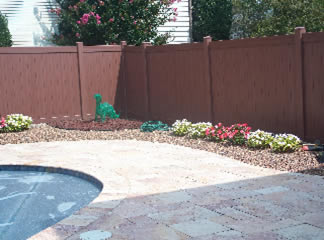
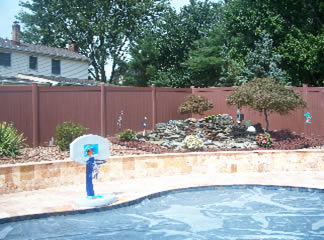
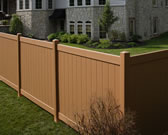
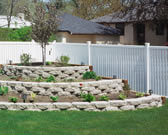
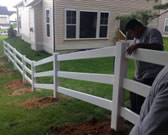
The order was taken—all the T’s crossed and the I’s dotted. The support from Cherry, Georgia and Jim, the owner, was incredible. They nursed us through the whole journey and a picture is worth a thousand words.
Happy, satisfied customers,
Fran and Mitch Schneider
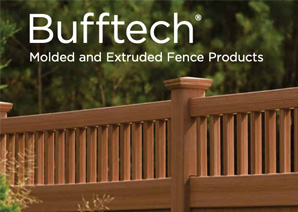



“Thank you for remembering us. The fence is holding up beautifully against the sea winds and salt. Do you have some new literature? We’re in the midst of moving to the coast full time and will be landscaping by spring time.”